2025 in review: A roller coaster of federal grant cuts, increased network engagement
Dear network members,
To say that 2025 has been a roller coaster would be an understatement.
We started the year by launching our largest project to date: the From Food Waste to Opportunity: A Path toward Climate, Environmental, & Economic Justice project. This generational $18.7M investment from the Environmental Protection Agency in the critical area of food waste reduction was meant to substantively reduce the top single material in our state’s waste stream. Over the next three years, RIFPC and nine municipal and nonprofit partners planned to implement a multilevel approach to excess food donation and food waste composting in lower-income communities across Providence, Pawtucket, Central Falls, Newport, and Middletown. Instead, by the end of January the federal government had frozen this grant along with about half of our remaining organizational budget. We expected our staff to grow from eight to 11 in 2025. Instead we were forced to reduce it to five – the most painful professional experience I have ever had, but nothing compared to the experience of the steadfast and committed staff members to whom we had to say goodbye: Allison Montagnon, Max Mason DeFaria, and Rozie Schleinig.
Thankfully, during this time of duress, our private foundation funders stepped up to support our work. This was even more critical because the RIFPC network grew considerably this year. The strength of the network lies in its members. You continue to show up, especially when times are tough, to work collaboratively to make our local food system more just and resilient.
Here are a few highlights from 2025….
Our January Network Retreat gathered more than 80 volunteers, creating an opportunity for people who want a more equitable and resilient food system, and to reaffirm the positive future we want to build together. A centerpiece workshop on “The Art of Connection” led by Dr. Jerrilyn Stokes and Kimbrelia Dixson of Progressive Movement Counseling & Consultation prepared the network to foster equitable and open collaboration over the year.
In February, as part of the National Sustainable Agriculture Coalition’s (NSAC) Winter Meeting and their lobby day, Max Mason DeFaria and I met with all of Rhode Island’s Congressional delegation. We asked Sen. Reed, Sen. Whitehouse, Rep. Amo, and Rep. Magaziner to do everything they can to ensure the current White House Administration follows the law. NSAC is an alliance of grassroots organizations that advocates at the federal level to further sustainable agriculture, food systems, natural resources, and rural communities. Composed of organizations from across the country, NSAC members work together to bring their grassroots perspectives to discussions around the Farm Bill, federal appropriations, and other national policy conversations.
In March, we convened nearly 250 wasted food generators, composters, food recovery organizations, regulators, legislators, and many others to network, trade ideas, and learn more about compost and the wasted food ecosystem at the 2025 RI Compost Conference & Tradeshow. This was the largest attendance ever! After a welcome from RIFPC and co-host Rhode Island College and opening remarks by Michelle Carnevale, Executive Director of our headline sponsor, 11th Hour Racing as well as Domingo Morales, a New York Times-featured compost advocate and the founder and CEO of Compost Power, gave the keynote address.
Also in March, legislators, advocates, and food system champions gathered at the Rhode Island State House for RIFPC’s Good Food Policy Day, an annual celebration of the power of advocacy. Mingling in the historic Bell Room, dozens of food advocates shared information on policy priorities for 2025, including support for local composting, creating a tax credit for surplus food waste donations, providing free school meals to all students, and reducing the tax burden on urban and small farmers. A highlight of this year’s event were citations passed concurrently in the Senate and House of Representatives honoring RIFPC for its contributions toward a more just and resilient food system for Rhode Island. The honors were the first-ever such acknowledgement of RIFPC’s work from state legislators.
Later in the spring, RIFPC’s new Business Support resource hub was launched on our website. Farmers, fishers, and other Rhode Island-based food entrepreneurs can search the offerings of 20-plus groups that offer valuable training and services free of charge. Among the organizations with listings are Rhode Island’s three conservation districts—Eastern, Northern, and Southern. These quasi public/not-for-profit organizations are dedicated to conserving the state’s natural resources. Their staff members provide no-cost assistance with applications for federal funding as well as other technical assistance.
In late summer, close to 100 attendees gathered at the Providence Public Library for our annual Policy Retreat. The annual event launched the Council’s work on selecting policy priorities for the upcoming legislative session. The day began with an address from Lieutenant Governor Sabina Matos, who shared information on her office’s “Fair Price Grocery Agenda,” a four-bill legislative package that addresses supply-chain fairness, digital pricing and consumer protections, and food deserts. Council members were excited about how the legislation could lead to a fairer environment for food businesses while increasing Rhode Islanders’ access to fresh foods. This year, we honored Senator V. Susan Sosnowski and Representative Michelle McGaw with 2025 Changemaker Awards, an annual award that honors two outstanding Rhode Island legislators for their leadership in driving good food policy forward.
At the end of September, we concluded the first phase of the successful three-year, USDA-funded Rhody Feeding Rhody Alliance project. A simple concept born in the early days of the COVID pandemic, the Alliance was founded as a way to help Rhode Island farmers and fishers as well as residents struggling with food insecurity. The first phase of the Alliance resulted in close to a $1M in purchases from at over 100 local farmers, fishers, other food producers, hundreds of thousands or produce gleaned and seafood distributed, and over 50 emergency food providers distributing fresh, local food at over 80 locations. Our implementation partners—Farm Fresh RI, Southside Community Land Trust, and the Commercial Fisheries Center of RI—built this market to connect local farmers and fishers and Rhode Island residents in need of fresh, local, culturally appropriate food. We are now entering the second phase of the project, where the Rhody Feeding Rhody Alliance will expand in order to meet new and ongoing challenges to food security and local food market development the state will face in 2026.
In November, we published the state’s first emergency food disruption plan. “Setting the Table: State Priorities and Action Tools for Rhode Island Food Disruptions.” This comprehensive plan, created collaboratively by state agencies and other key partners, is currently supporting state government in taking action to address losses of federal food security data, increases in food insecurity, changes to the federal Supplemental Nutrition Assistance Program (SNAP), and related disruptions to food access in the state.
As the year comes to an end, I also want to mark two important transitions. Josh Daly is leaving our staff. His work as our Associate Director for Operations made a substantial impact over the past three and -half years. Also, Amber Jackson left our board during the year. Her advice was always valued, and her perspective as a small businessperson is missed.
Our staff works hard to make sure network members are connected and supported. We don’t exist without you. Together we will are ready for the challenges that lie ahead for us in 2026.
Take care,
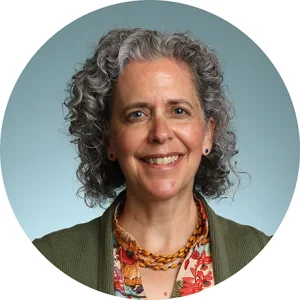
Nessa Richman, Executive Director