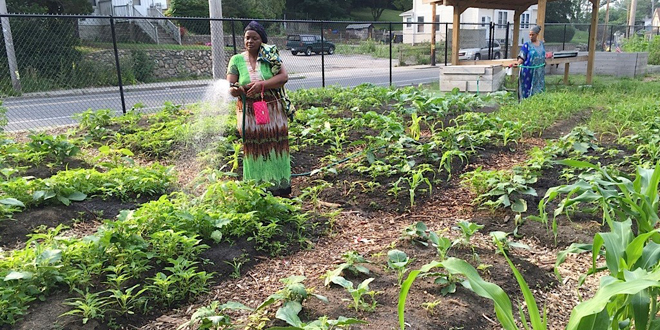
Tending the African Alliance of Rhode Island’s community garden.
Thanks to tireless efforts by advocates across Rhode Island and the dedication of legislative champions, the Rhode Island General Assembly advanced five landmark food systems-related bills in June 2026.
The impressive package of legislative wins “proves what strong, networked food systems stakeholders can accomplish together,” says RIFPC Executive Director Nessa Richman, noting the months and years of effort that led to the bills passing. “Policy advocacy requires years of foundational groundwork for moments of sudden progress.”
The bills include: Small and urban farmer tax fairness: exempts urban and small farmers from sales, property, and income taxes to increase their economic viability and capacity.
👩🌾 Small and urban farmer tax fairness (H2827). As of July 1, 2026, Rhode Island exempts urban and small farmers from sales taxes; real, tangible and personal property taxes; and income taxes, increasing their economic viability and improving the farmers’ capacity to serve their communities.
Prior to these changes, Rhode Island’s tax system primarily benefited large, rural farm operations. To qualify for state farm tax benefits, growers needed to cultivate five acres or more, which excluded many beginning, historically marginalized, and city-based farmers. This tax update recognizes smaller growing spaces that improve community health, local food security, and property values.
🛒 Grocery store restrictive covenants ban (H8106). Rhode Island has become the second state in the nation to prohibit chain grocery stores from preventing competitors from moving into commercial spaces they own or lease. The bill is one of four consumer protection and antitrust bills proposed in Fair Price Grocery Agenda, a legislative package led by the office of Lieutenant Governor Sabina Matsos.
🩺 Food Is Medicine pilot program and task force (S2892). Declaring that diet-related chronic diseases including diabetes, cardiovascular disease, hypertension, and obesity represent a significant and growing burden on Rhode Island’s residents and healthcare system, this bill requires the state to submit a plan to expand Food Is Medicine programs across the state.
The pilot program will explore providing clinically designed, medically tailored meals and other nutrition-based supports to eligible Medicaid beneficiaries with the highest health risks. A newly established task force led by the bill’s sponsors, including Representative Justine Caldwell and Senator Victoria Gu, will outline specific eligibility criteria, data collection methods, and value-based payment structures. The state’s Executive Office of Health and Human Services is authorized to secure federal Medicaid Section 1115 waivers to fund these interventions and will submit a finalized list of findings and recommendations.
🏫 Reducing food waste in schools (S2438). All school food service contracts in Rhode Island now require provisions mandating the composting or recycling of organic waste. School waste audits must be made public, and “share tables”— already used in many cafeterias for students to leave unopened food they don’t want for others — will be incorporated into state guidelines.
💰Millionaire’s tax (S2238). A phased-in 3 percent tax will help ensure that Rhode Island can provide essential services for the most needy residents during a time of rising fuel and food prices.